Tuesday, August 21, 2018

Lee Shi Tian & Seth Manfield are getting my Vote


Topics: Magic Pro Tour Hall of Fame 2018 Voting, accusations of cheating, impact of implicit (and overt) bias

The Hall of Fame chatter this cycle has been equal parts amusing and exhausting.  And I'm sure the candidates themselves are feeling that the balance is not so equal - they must be extremely exhausted and frustrated.

What might have been whisper campaigns about shady conduct in past years were shouting campaigns this year.

Very early in the cycle, we saw Onrej Strasky raise concerns about Seth Manfield:


and CalebD raised concerns about Lee Shi Tian:


I had initial reactions to all this, but I want to write more today about where I ended up after a lot of deliberation and consultation with other voters (not all of whom agree with me, but all of whom have insights I can learn from nonetheless)

Lee Shi Tian:

The "8 minutes to sideboard" thing seems to have been debunked as not actually 8 minutes of match clock used.  Look at the reply tweets and I've heard from others that the judge was keeping a separate clock and this wasn't Lee Shi Tian extending an unreasonable amount to try and draw.  [EDIT: there is some disagreement I'm receiving from players close to the action about game clock vs. not game clock, as there was not a feature match hold, but the max it could have been can be determined from the video and comes in under 6 minutes, not the 8 that Caleb tweeted out.]  

Aside from that though, I feel the need to comment on implicit racial and cultural bias.  In corporate training sessions, in casual discussions, in activist workshops, whatever the context, you often hear a plea for people to be "aware of their biases."  I have learned in doing this type of work that you never really want to stop the analysis or action plan at mere "awareness."  What we do with that awareness might make all the difference. 

When I train and/or collaborate with people on reducing bias, I emphasize that knowing when to go slow and when to go fast is a huge part of what to do about bias.  Moving fast often means being anchored to your first impression, refusing to dig deeper, and refusing to zoom out and look not just at this case but also similar cases (such as accusations against friends or even plays you have made yourself that looked shady but were not).  

So, in order to practice what I preach I had no choice but to slow down and think about implicit bias and how Lee Shi Tian was being treated regarding some player accusations that shady things were happening, even though judges and cameras didn't uncover all that much (he plays an extra land here, a summoning sick creature is tapped there - things to be concerned about certainly but not exactly pocket Flings and Hornet Queens).  When you slow down and reflect, you also notice and consider the mistakes that you yourself have made.  This last weekend playing my UW Delver deck in Legacy I tried to Snapcaster + Surgical someone despite my own Grafdigger's Cage in play.  I just forgot.  Now, if that's Lee Shi Tian on camera next week people are going to say "It's his Cage, of course he knows what it does!" etc. and there's nothing he can do to rebut this.  Same goes for playing two lands.  We have to track this stuff and see how it adds up, and I have not seen a mountain of evidence against Lee Shi Tian, especially for a player who has played a ton on and off camera at the highest levels.

And there is absolutely a snap-judgment willingness on the part of Americans and others to assume a player who isn't from the U.S. or Canada is cheating when mistakes do happen.  An important footnote is that I don't think this in any way absolves people who do cheat and happen to be from another region (anti-bias mindset does not mean putting a blindfold on), but when there isn't much to go on, we should resolve uncertainly about players for whom there is some evidence (but not a mountain) in favor of those players' reputations, and we should do so whether they are American or not.  

Lee Shi Tian also has accomplished more than I would have accomplished if I was in the same region he is in, and had the skills he has (I don't).  What I mean by that is that he has sacrificed a lot to travel and form community from the APAC region (non-Japan where much of the infrastructure for this would have already existed).  That is meaningful to me, and the testimonials on this did move the needle for me.  

Seth Manfield:

Despite Ondrej's tweets and some agreement, there is even less to go on with Seth than there is with LST in terms of concerning anecdotes.  Here, implicit bias shows up for me as viewing Seth as an outsider to my friend group and play group.  I often find myself rooting against Seth because my friends and teammates are among the people he is playing against (and often defeating) in the feature match and top 8 area.  So I had an initial gut reaction of "I don't want to vote for Seth."  We don't have to be proud of our initial reactions, but we have to look them in the eye and do the work of digging deeper to arrive at a less biased conclusion.  When I did that work and looked at Seth's accomplishments and the accusations of shady play, I emerged with a clear Yes vote.  

My HoF ballot this year will include both Lee Shi Tian and Seth Manfield, two of the most qualified players that in my opinion have more than earned a vote.  

I am considering other players who have 4 or more top8s still (I reviewed those with less than 4 and didn't see a compelling candidate there that I had not considered at length in years past)., but I wanted to share this info above while timely, as I consider the rest of my ballot.

Best,
Matt Sperling 

Monday, June 11, 2018

Banned and Restricted Announcement - June 11, 2018

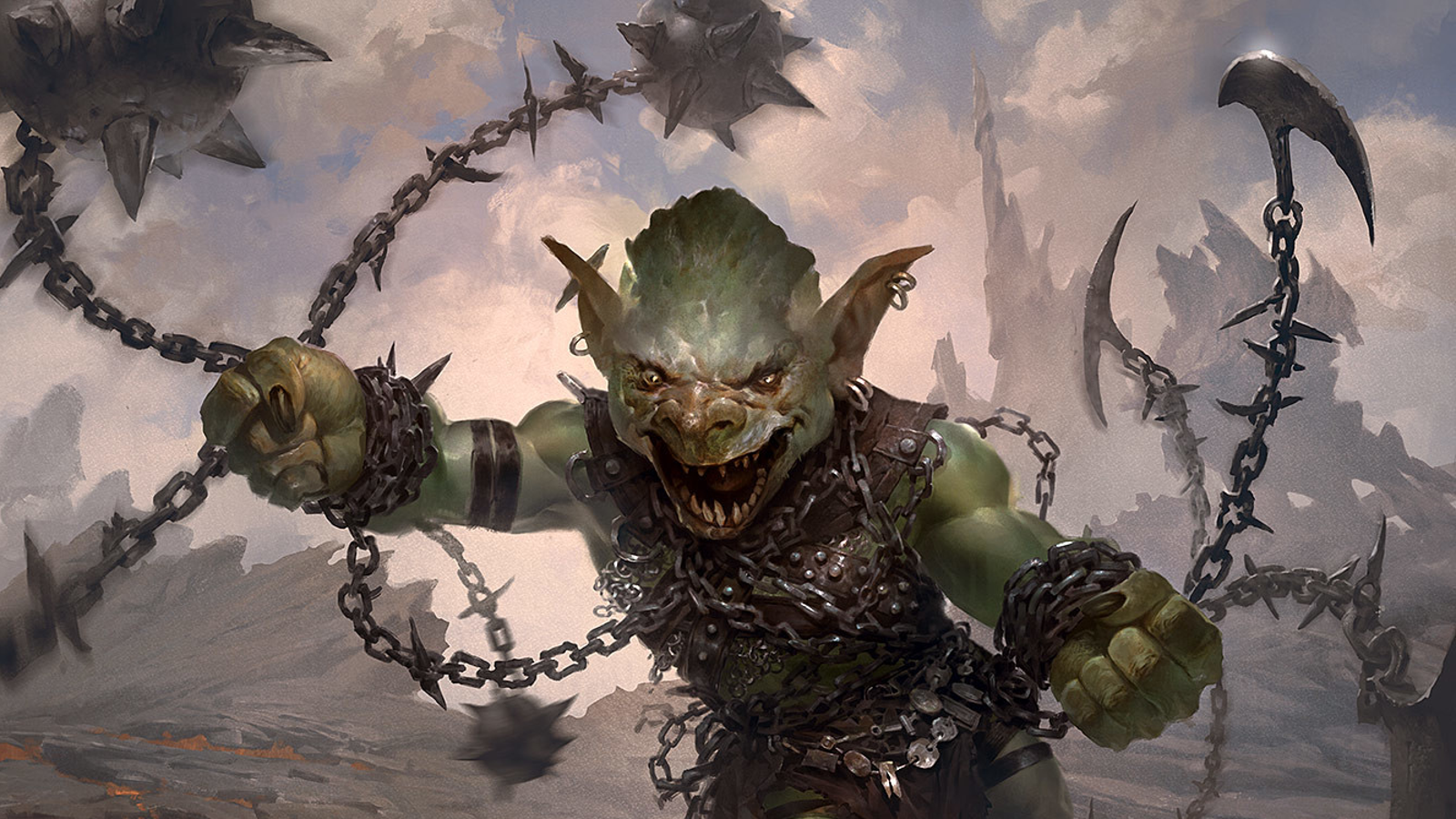
Image result for goblin chainwhirler

By Errant Foresight

STANDARD: No changes

You read that correctly. Goblin Chainwhirler remains Standard-legal, and that will be the case until Dominaria rotates. We simply cannot keep banning cards every few months just because the internet has allowed the competitive Magic community to distill a format to its most cold-blooded essence in record-breaking time. Banning kills consumer confidence and creates a general feeling of uncertainty and paranoia, even if it does make Standard reasonable for a few weeks until you all break it again.

In this particular instance, well...Dominaria has the makings of a classic set. The cards are fun, powerful, and appealing, and the draft format may legitimately be the best of all time. We don't want a blemish on what we hoped would be our signature offering for years to come.

That's why we're asking for your help. We believe--and we think everyone would agree--that everything would be a lot better if you just...chose not to play Goblin Chainwhirler in your Standard decks. Please? The card has fostered an unhealthy homogeneity in deckbuilding and created negative net fun for everyone who plays our most popular format. If you all could reach a mutual agreement to leave it out of your decks without us actually having to ban it, everyone wins.

We're not decreeing that you can't keep playing the Chainwhirler deck--and don't kid yourself, there's only one actual deck there. But what does it say about you if you continue to play it in light of the damage it causes? I can't speak for anyone else, but I know I wouldn't sleep well at night if I were contributing to a poor experience for Magic players the world over. The "win at all costs" mentality has deleterious effects on others and on yourselves.

Furthermore, isn't the card what some would call "training wheels"? Are you really so bereft of talent that you need some undercosted development failure to do your heavy lifting? Are you incapable of winning two rounds at FNM without freerolling your opponents' Llanowar Elves and Glint-Sleeve Siphoners? You don't actually want to play Magic; you just want the automatic wins. Luis Scott-Vargas himself has gone on record that he looks down upon this play pattern. Maybe you don't need Chainwhirlers--maybe what you really need is practice.

If you insist on continuing to ruin everyone's fun because you suck at Magic, I challenge you to the following: the next time a young mage shows up to your LGS with a Saproling deck, I want you to look his or her parents in the eyes and tell them that YOU'RE the reason their kid will be having a horrible time this evening. Tell them it's more important for you to win a couple of boosters than for their son or daughter to find fulfillment in expressing themselves creatively. If you can bear to do that, by all means, keep whirling those chains. But the least you can do is take a little responsibility for your behavior.

Now, we understand that not everyone will be amenable to this line of thinking, because not everyone is as smart and reasonable as we're hoping you'll be. If your friends or someone else at your LGS continue to play Goblin Chainwhirlers, we're giving you the green light to ridicule them. If we're all being honest, some of you don't like this sanitized, kumbaya environment we've been trying to foster, and you've got a lot of pent-up hostility. This is your ticket to berate a host of people consequence-free. If the Chainwhirler stalwarts in question are your friends, it might be time for some serious soul-searching. Why would you want to associate with someone who's willing to win at the cost of literally killing the game you love? Stop inviting them to your group outings until they put the goblins down. They'll come around.

We are also changing the way we report winning decklists from the Magic Online metagame. Standard League decklists will continue to be curated in a way that ensures that a diverse array of decks is shown, and to make that even more effective, any deck that manages to win with multiple one-toughness creatures in it will be displayed at the top of the list and will be displayed the following week as well. This is not intended to "trick" you into playing one of these decks, but rather to show you the possibilities that are unlocked when the players who insist on playing Goblin Chainwhirler (who we refer to internally using the "SpikeWhirlers" psychographic) decide to embrace their inner "Richie/Rachelle" (psychographic for players who are insensitive to entry fee losses).

So to reiterate, Goblin Chainwhirler is NOT banned. But we'd really prefer if you didn't play it.

MODERN: Mox Opal, Scalding Tarn, and Cavern of Souls added to Reserve List

Not every Spike is what we would call a Spike-Richie or Spike-Rachelle. With increasing frequency, a new player looking to join in on the Modern format fun faces a significant and difficult investment decision. Some Modern decks now cost what Legacy decks cost just a few years back. That investment requires trust in Wizards and for some it requires putting money they might need later in life into a Magic collection. In order to protect that investment, we are adding Mox Opal, Scalding Tarn, and Cavern of Souls to our Reserve List.

This ensures that Modern remains an accessible format by protecting the investments new and existing players make when buying into decks like Affinity, Lantern (a popular entry-level choice), Storm, Humans, and others. What makes Modern great is _____ [Note to editor: please ask around and find someone who knows the answer, nobody on our floor had it], and we think these Reserve List additions will give more players access to that experience without having to risk financial ruin if we reprint their cards.

There is one more detail here I need to mention quickly. Our Reserve List commitment is to protect not only valuable cards as the stated intent might suggest, but also random cards that are not yet valuable, but could someday become valuable by virtue of being on the Reserve List. Would we structure our promise this way if making it today? No we wouldn't, but it is the promise we made. So we are also adding Gideon's Phalanx; Chandra, Bold Pyromancer; and Rimefeather Owl from Modern to the Reserve List.

Wednesday, February 21, 2018

That wasn't even the worst question...(GDS3)

Mark Rosewater revealed the answer key to the Great Designer Search 3's multiple choice test about a week ago and some interesting discussion has followed.  https://magic.wizards.com/en/articles/archive/making-magic/make-choice-part-1-2018-02-12


Even those of us who weren't involved in GDS3 directly took interest, most notably PVDDR:


Thus began a long Twitter discussion over whether that 4/4 flyer question was sloppily worded or downright incorrectly worded, or something else.  

I thought the question was so poorly worded that if the test actually mattered, and I was in charge, I would throw it out.  But today I'd like to point out that this wasn't even the worst offender on that same test!  If I could only throw out one question, I would throw this one out:

32. You've designed a card, and you want the Play Design team to like it. How should you choose your casting cost? 
a. Ask someone from the Play Design team to choose the casting cost.
b. Find a similar card as a basis for the casting cost and then make it one cheaper.
c. It doesn't matter; they'll fix the cost if you get it wrong.
d. Pick the strongest cost that isn't broken.
e. Use your intuition.
Here is Mark Rosewater's notes in the answer key:
Making Magic is a collaborative process. To best accomplish this, you need to learn to let people play to their strengths. Could I cost a card? Sure, but I won't do it as well as a play designer who was hired specifically for their ability to judge power level. By asking them first, I lessen the chance that playtesting gets affected because of poor costing. Also, if your goal is to get Play Design (or anyone, really) to sign off on something, it helps to involve them in the process.
I don't think MaRo's answer is the best or even the second best answer among the choices given.

The biggest problem with this answer is that asking another team for help is absolutely part of a healthy exchange of ideas and part of solving complex problems in a collaborative way, but it's a very dangerous hammer if even routine daily tasks such as picking a casting cost for a card you want spikes to like start to look like nails. 

"Who should write the first draft?" is an important question in many contexts.  "Who should review that first draft and help improve it?" is a separate and equally important concern.  But the answer to these challenges is certainly not to collapse them into one question or one step.  It's fine if Play Design has early and frequent input into the design of casting costs, and it's even fine if there is an exceptional circumstance in which they do get first crack at it (if the card has "Emrakul" in it's name for example, maybe we can shortcut right to Play Design input), but the question's only parameter here is that the designer wants Play Design to like the card.  That's way too broad a category of designs to be going out to a team whose primary job isn't design and asking them to do the initial design work.

One answer (not my favorite) that is still better than MaRo's top choice is "Pick the strongest cost that isn't broken."  This isn't an ideal starting point since you won't always be right about what is broken, you might not even have enough context to know what broken means in the world the card will be released into, and not every cost should be near the maximum power level anyway, but your best guess at strongest not-broken cost is a better starting point for Play Design to work with than no starting point at all ("you pick it"), especially if you just interpret "isn't broken" conservatively.  So if you're using this sparingly (which you better be - see above) then "strong but not broken" plus your intuition (hmm, what's that?) about where that line is, applied conservatively, leaves you at least actually attempting to do your job before handing it off to QA.

Because the other answers are all deeply flawed, "Use your intuition" is the best answer among those presented, even though it's a weird answer in the context of multiple choice.  You don't think your best designers can create casting costs that please the Play Design team within the boundaries of fair power level, even as a first draft that will get additional testing?  That's a depressingly low bar for design.  And if you're thinking, "'Intuition' is just too ill-defined to scale properly or be consistent designer to designer" or something like that, my response is, "If intuition wasn't involved in a big way, they'd be tweaking algorithms instead of interviewing humans for the design roles."  Let me get this straight, intuition is something we all know is a major asset your strongest designers have, but incoming designers are scored INCORRECT if they say they intend to use their intuition to design a card?

I"ll end with this: The Legal team (my team) where I work often reviews marketing materials before they are released, to check for claims that might not be well supported, IP issues like use of trade names & media, trade secret/confidentiality concerns about the level of detail in any description, among other issues.  If I'm interviewing a marketing candidate and I ask them, "How would you make sure that marketing descriptions of, say, certain security features are satisfactory to the Legal team?" the answer, "I'd use my intuition about what Legal is looking for, then have Legal review a draft before it goes out" is a pretty good answer (not quite as good as actually unpacking what the issues might be or how to find out, but pretty good).  On the other hand, "I'd ask Legal to draft the content for me" would be a horrible answer.  

Tuesday, November 28, 2017

The Pros' Open Letter: A Case Study in Allies Missing the Point

I’ll join the chorus of applause for the empathy and good intentions on display in “An Open Letter to the Magic Community By VariousMagic Pros”.  Moving a step or two beyond intentions, into the ideas and action plans these allies have presented, I will be holding my applause. 

You Almost Never Solve a Problem without Locating It First

I saw at least one screenshot of an MTGHeadquarters tweet about Christine Sprankle that I found deeply troubling. 


(h/t to Drew Levin who when asked for evidence of abuse showed how easy it was to find it). 


The video has been taken down, but I don’t think it’s hard to see how tagging someone @[theirhandle] into a discussion about cosplayers being raped with the intention of annoying/trolling that person crossed the line into online harassment and bullying.  I won’t be contorting myself to defend this, and if I could snap my fingers and have this never happen again, I would.  People asked, and are still asking, “Was this actually a big deal?”  And I think it was.

The Pros’ letter states,

“The online harassment she has been receiving is demeaning to her as a cosplayer, content producer, and member of the Magic community. Unfortunately, Christine is one of many people whose enthusiasm for Magic has been negatively impacted by pervasive cynicism and bullying.” (emphasis mine)

Wait a minute.  “Pervasive cynicism and bullying?”  Those aren’t close to the same thing.  The Professor understood this, and in his video was clear and deliberate in identifying himself as a critic and saying he was speaking out about bullying, not about criticism.  What The Professor was wise to articulate, the Pros completely missed. 

A bit further down, the Pros offer,

“Everyone should be able to engage with the game however they see fit—whether that’s playing casually with friends at home, competitively at Grand Prix and Pro Tours, judging tournaments, cosplaying as their favorite characters, streaming on Twitch, or any of the million other ways people enjoy this great game. These are all equally valid. It is unacceptable to treat any of these interests as below yours.”  (emphasis mine).

This is now a full bait-and-switch.  People said the issue wasn’t that serious, this group of Pros and others on Twitter responded (and I believe demonstrated) that it was serious, and now when it’s time to propose a solution we are talking about elitism and rudeness regarding cosplay and commander as inferior hobbies? 

The implication here is that Christine Sprankle stormed off upset that her interests weren’t being treated seriously enough.  In fact, she left the community because she was being insulted, personally and professionally, and harassed.  If you aren’t speaking to what she actually faced, you aren’t supporting her, and you minimize abuse whenever you put it in the same bucket as ordinary criticism/elitism/fandom. 

I was pretty surprised to see the press release about a new coalition against bullying not even wait 3 paragraphs before treating cynicism and elitism as bullying.  Usually people wait until at least the second article to make it clear that they don’t understand what they ought to be targeting, don’t have a real solution to the issues they need to target, and are left with a plan that is ineffective where you need it and problematic where you don’t. 

The players here have good intentions.  But allies need to be reminded over and over again that good intentions aren’t enough.  This group of Pros didn’t even speak to the underlying ideology and culture that led to the bullying Sprankle faced.  Worse yet, they pointed to an ideology of gaming elitism which I believe distracts us from the deplorable conduct of MTG Headquarters that was not motivated by that kind of fandom-elitism stuff. 

If you’re being harassed at an event, there is a judge and event staff already there to help you, and they are much, much easier to identify than even top pros like Immanuel Gerschenson.  Judges and Staff may even be trained on how to properly respond - go to them.  With this letter, the Pros add to volumes of other work by well-intentioned allies producing content that doesn’t understand or speak to the issues that matter.  

Specifics of What the Pros Decided Not to Speak To 

Jeremy at MTG Headquarters / Unsleeved Media holds regressive and hateful views towards women evidenced by the way he discussed cosplay and its fans, up to and including a discussion of rape where he tagged a subject of that discussion (see screenshot, above).  He uses the terminology and the thinking of the internet alt-right, and this thinking is toxic (specifically, it is a bunch of immature people more interested in trolling and being un-PC than in finding a better path forward for the societies we live in - the people not even trying). 

Jeremy was willing to name his target.  The Pros were willing to name her too.  We should be willing to name Jeremy too.  And to name what he has done, not create some sugar-coated approximation about which hobbies someone treats with equal regard.  We should speak out not about “cynicism” generally, but about the kind of unproductive and immature swarm of negativity this era of online trolls is infamous for personally aiming at vulnerable targets.  And if we have solutions to propose while invoking the name of an online harassment victim, they ought to be solutions that address what her harasser did, what motivated him, and/or what control we have over whether he can do it again tomorrow.  


Friday, October 27, 2017

The Search for Useful Metrics & Fair Discussion

Imagine that there are 10 high schools in a school district and nearly everyone suspects that one school (Acme High School, the one in the poorest neighborhood) has inferior football equipment compared to the rest of the schools. 

Concerned parent David Francis writes an op ed in the local paper stating that something has to change.  He lays out some pretty convincing evidence that Acme is underfunded when it comes to equipment.  He also points out that they have never even been to a state championship quarterfinals in football (which everyone agrees is true).  “For me,” David writes, “The ultimate metric of quality equipment is whether a team is ever represented in even the quarterfinal round of the state championship.”

Another parent, Mark Smith, responds in the comments that although everyone knows Acme has worse equipment, if we use state championship qualification to measure status or progress, we 1) won’t know whether the equipment is improving at all, and 2) are asking the kids to prove, by winning, that they are properly supported.  Can’t we find a different way to measure the equipment, or at least an effect of having good equipment that is closer to the cause (and therefore more reliable, with fewer confounding variables)?

Parents at Acme (and their supporters) can’t believe Mark doesn’t care about these kids getting better equipment!  Mark responds that he does care about the kids, and points out that the teams that make it to the state championship playoff level have 100 advantages other than equipment over Acme High.  Kids move to play at those schools.  The best coaches coach there.  They have every advantage you can think of that comes with caring deeply about winning at football and being in a position to help yourself do it.  Importantly, even with the exact same equipment, Acme will not be making the playoffs in the next 5 or 10 years. 

“So, you don’t think we should even improve the equipment?”  Mark didn’t say that.  In fact he said more than once that we should improve the equipment.  They accuse Mark of simply playing a semantics game.  What exact game and which semantics it is that got unfairly twisted, they never quite say.  David wrote that there is something important and we ought to track our progress, everyone agreed, and then Mark pointed out that the way David suggests we do so simply won’t work

Finally, David adds that “Well, whatever the total circumstances are that keep Acme High out of the state championships, we need to remedy them all.  Stop being a dick.”  But Mark points out that Acme spends its discretionary budget on afterschool programs and SAT training and that those programs might suffer if funds were redirected to football.  In other words, Acme has made different choices than schools that go all out for football championships.  Mark believes we can search for ways to improve the equipment without demanding a state championship.  

_____________

This is where we find ourselves whenever someone suggests that we measure our progress in creating a welcoming environment for women and girls by checking in with the Pro Tour and seeing how many women are succeeding there.  Most recently, this article http://manadeprived.com/men-magic-building-community/ offered Pro Tour participation as not just one thing to check in on, but as “the ultimate metric of success for all efforts meant to make Magic more welcoming.”  There isn’t a way to read that with any amount of fairness and not conclude that Daniel believes that’s where you look to investigate our progress.

But although we do need to measure our progress in inclusiveness, this metric doesn’t work.  The end result of looking there is not a significant increase in understanding what has happened over the last 1 year, 5 years, or 10 years.  

I wrote on twitter that:

The factors that I believe contribute to women not showing up on the Pro Tour are (in no order since I don’t know enough to come close to ranking anything): sexism and discrimination denying them opportunities and resources,  personal choices about how to spend their time and energy, personal choices about what a successful and healthy hobby is, the competitive advantage men have accrued over years of having fewer barriers and more interest (whether that interest is caused by a toxic community or not, the gap that accumulates is there), the fact that Wizards of the Coast has hired the most promising players and role models off of the Pro Tour into jobs that prohibit them from competing, and other factors. 

My relationship to this hobby was the most negative in my life when I was trying the hardest to qualify for the Pro Tour.  I put in hours and hours and got little tangible benefit in return.  Yes I made friends along the way, but that’s the kind of thing people say whenever they do something stupid for a long time and happen to make a friend out of someone else walking that same misguided path.  Was I financial rewarded?  Was I emotionally rewarded in a way that let me find balance in my life (eventually, yes, but not until over a decade of financially and emotionally draining choices).  I don’t want to fall into the familiar trap of measuring women’s progress using men’s goals.  And there is an overwhelming amount of evidence that men and women do not choose to spend their time the same way or pursue the same goals, for a multitude of reasons.  (This is an article about the research which I found informative on the topic: http://slatestarcodex.com/2017/08/07/contra-grant-on-exaggerated-differences/


If you go survey women at local game stores and try to measure inclusion that way, there will be confounding variables too (selection bias unless you somehow find all the ones that stopped showing up comes to mind), but does anyone doubt that that survey is closer to the source of what we are trying to measure?  There are countless numbers of ways to check in with how we’re doing as a community when it comes to inclusiveness.  Stop focusing on the one with the most confounding variables, the one that hasn’t moved whether things have gotten worse or better over the years.  If you want to measure how you’re doing on something, get close to the damn thing and measure it fairly.

Lastly, if we want to measure diversity on the Pro Tour, let's measure it.  In that case, we are close to what we intend to measure in the same way we can always claim "Acme High isn't very competitive in football" and make a case.  What gets us in trouble is making a claim of one type, and a measurement of a very different type.  The trouble we get into can be described as a severed feedback loop, total blindness, about our progress towards an important goal (and lack of clarity about what that goal is).  

Tuesday, October 18, 2016

The Lifestyle of the Professional Magic: The Gathering Player

by Anonymous Pro 
[The Pro Tour player who wrote this asked me to share it without his name attached.  Please respect the author's anonymity by not sharing guesses or context clues about who may have written this piece.] 

Many articles have been written about the lifestyle of a pro. They are all lying, of course. The first rule of the Pro Club is that you don't talk about it. Nobody ever tells the truth because it just doesn't sell. You are a consumer.

Staring at the bottom of your glass, you reflect upon yet another weekend. Yet another city that looks the same as the last one, yet another airport, yet another convention center, yet another hotel. This is your life, and it's ending one minute at a time.

If the tournament is a success, you drink to celebrate. A failure and you drink to commiserate. Either way, the alcohol dulls the extreme emotions of victory and defeat. This tournament might be one of the lucky ones, where you make the early-morning trip home with some hardware jammed into your backpack, a phone full of notifications, and some weariness lifted from your heart. But most of the time, you are simply hungover and empty, passing your documents to the official before boarding your plane home.

Why would anyone want to live this life? One might also ask why someone would become a heroin addict. Cardboard crack is just as addictive as its cousin, and it has even been said that "nobody ever really leaves Magic, they just take breaks." Magic, the little scratch on the roof of your mouth that would heal if only you could stop tonguing it, but you can't.

As a young person seeking escape from a grime and lonely existence, Magic was the perfect vessel. It slowly changed from an escape to something more, as you became more and more competitive and began to reach higher and higher tiers of play. Attempts to play FNM or casual games of Commander couldn't get the juices going anymore, you now require a higher dosage of the drug only available at high-stakes tournaments.

You are awake late at night, unable to sleep, too many thoughts caught swirling around in your mind. With insomnia, nothing's real. Everything's far away. You're never really asleep, and you're never really awake. You head downstairs to the couch, turn on the television. A late night talk show host is going on about some debate. You haven't really been following the election. You shift over and knock a stack of cards over, and frantically drop to the floor to gather them all back up into a stack.

You wake up to the sound of your alarm clock. Somehow you had dragged yourself back into bed and slept for 7 hours. Its already 2pm, and your flight is leaving in a couple hours. You check your phone to see where you are off to this time. Providence, RI. What format is that again? You check your luggage. No cards packed, it must be a limited event. You wake up at O'Hare airport. Your last memory was checking your bags before leaving your house.

"I pass the turn. Go ahead." Your head bobs up. You have 5 cards in your hand. 3 lands in play. Your opponent has 5 creatures and your life-pad says you are on 3 life. Doesn't seem like you are winning this one.

Another round. You see your opponent signing the match slip, carefully check to see that its 2-1 in your favor. Good thing you got that one. What round is it again? The slip says 12. You always communicate in algebraic notation, only the losses matter, the number of wins changes yet remains irrelevant. You've already accumulated three losses, and in a tournament of this size your chances of top 8 are precisely zero. You simply have to grind out the last few rounds for pro points and cash. The money means nothing to you, it’s simply a number on a computer screen as your online account registers your input of cash, and as you pay bills, the numbers go up and down, up and down. As long as the number never reaches zero, it doesn't matter what it is. You remember a time when the number was so close to zero, and few of the changes were upwards, when earning $250 at a Grand Prix meant something to you. Now you flip coins in the parking lot for thousands of dollars, having started for smaller stakes, but kept on going up and up when flipping for $20 no longer gave you that rush you craved. Just like playing Magic for $250 no longer matters to you. You've dropped from events you could have won a single round in to cash.

You wake up to the sounds of your stomach growling. Home. You check your phone. It says you got 3 pro points in Providence. Good work. Heading downstairs, you open the fridge. There's some bread in the freezer, but the fridge is empty besides a bottle of ketchup, some half-rotten lettuce, an old jar of strawberry jam, and what looks like a couple spoons full of peanut butter.  How embarrassing, a house full of condiments but no food. You close the fridge and drop to your knees on the ground, laying your head on the cool marble countertop, purchased from an Ikea catalog. You've just slept for 13 hours, yet you still feel exhausted. That’s what a weekend of mental exertion with little sleep and a couple of flights will do to you.

People say you are lucky. That you are living the dream. Everywhere you go, they are all the same. Lawyers, Engineers, Teachers. "Do you have another job? How do you make enough money?" are constantly asked. The players you encounter commend you for your skill, and ask for advice you know will ultimately not help them at all. None of them ask questions worth asking. They only want to know what is the next deck to buy, what cards to bring in against this matchup, what is your secret shortcut to being so good. They don't want to know the truth, that success requires deep introspection, self-analysis and extreme dedication. They don't want to be told that even if they tried their hardest and did everything right, they simply aren't smart enough to succeed. "But at least you do what you love," you are told.


This story ends with you on a plane, sitting next to a man in a dark grey suit, sipping on a vodka tonic. Like others, he asked you what you did for a living out of habit, but when he found out his fake interest became real. You look at his briefcase and thousand-dollar watch and wonder if his lifestyle makes him happy, or if he also feels the same melancholy you do. You take out your laptop and begin to slowly drudge out yet another article.

Tuesday, July 19, 2016

My 2016 Magic Pro Tour Hall of Fame Ballot

I would describe this year in two ways: no quantitative slam dunks, and 2 qualitative slam dunks (Owen Turtenwald and Yuuya Watanabe).

I am not a statistician who was given a vote solely for my quantitative skills, so I can't ignore the qualitative feel, but I also want to cast not just a reactive ballot but an informed ballot.  So I find myself narrowed to two ballots that align with my general approach: 1) [Ballot Intentionally Left Blank], and 2) Owen & Yuuya.

Voting someone who doesn't belong is a bigger mistake than not voting someone who belongs, but when I think about Owen and Yuuya I just don't believe the risk of these being players who don't belong is very high.  Playing at or near the top (not top LEVEL but straight top) of the world for years and years is something that Hall of Famers are made of.  Leave all that "he loves the game!" crap behind, these two were some of the toughest opponents in multiple years, multiple formats, and multiple ways.  Even on a bad day, these guys didn't give you much you had to go take it.  My A Game never matched their A Game and their C Game, well, I probably couldn't even tell it apart from their A Game.

Notes on others: Heezy - I love the guy but if Arnost Zidek or Mitamura had his career I wouldn't think twice here and I owe it to everyone to try and be somewhat objective.  4 top 8s with a win is nice but if it was that simple the requirements would be hard-coded.  Can't do it.

Floch/Seth - Gotta stretch results out a bit, prove you can do it for an extended period of time.  They might enough for a Rich Hagon e-book though.

Justin Gary/Scott Johns/Saito etc: No need to have same discussions year after year when the crowd has spoken and the resumes have not changed.  The hall is too big to accommodate people who don't make an impression their first couple times on the ballot if nothing changes, unless they were very close and you never took a hard look the first time.  If people were dicks or angle shooters or whatever I won't be the most qualified to opine but I see no need to revisit every single year.

Marin Light Beer - See Herberholz above.  Where the stats are borderline and Zac Hill writes about how the person was a master I'm a mortal lock to not vote for them.  Hipster-master != actual master.